The mango that broke a market
It is peak mango season in India. The Alphonso harvest is at its richest, the Kesar at its most fragrant.
The current visit of Myanmar’s president, U Min Aung Hlaing, to India comes at a freighted moment for both countries.




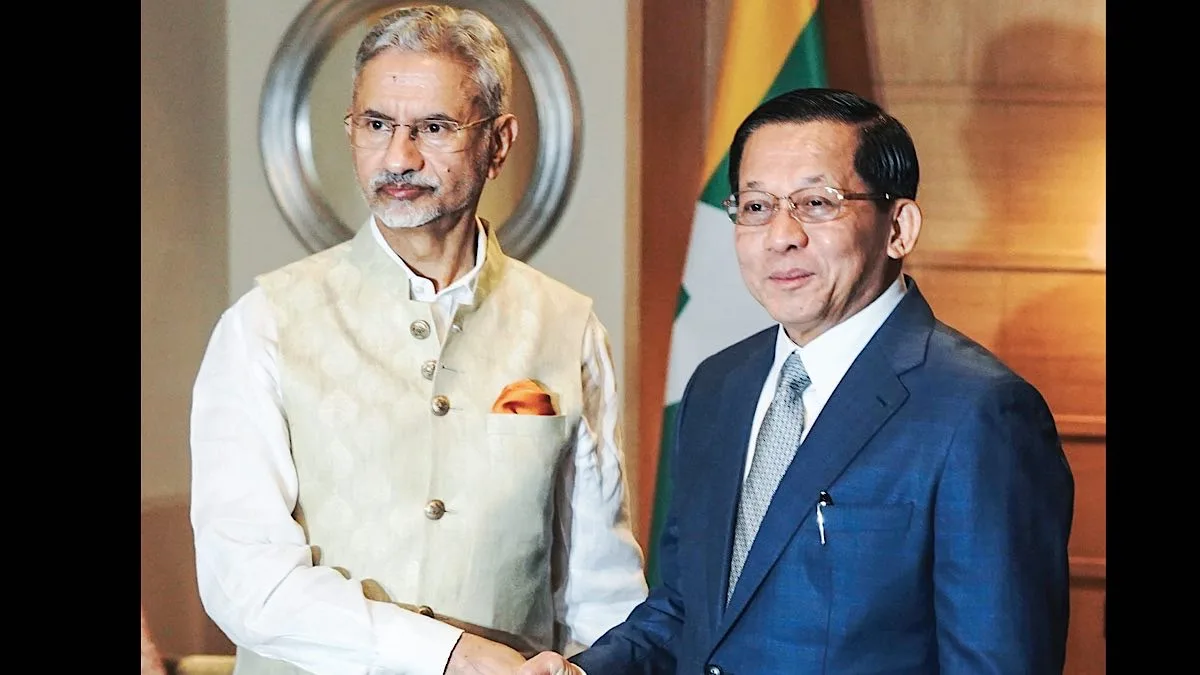
Photo:SNS
The current visit of Myanmar’s president, U Min Aung Hlaing, to India comes at a freighted moment for both countries. Min Aung Hlaing was the commander-in-chief of the Myanmar military, the Tatmadaw, when it executed the 1 February 2021 coup that overthrew the elected government led by Aung San Suu Kyi, and proceeded to launch a crackdown on opponents, thereby plunging the country into a civil war that continues to this day.
He has led the ruling junta in various capacities since, most recently getting elected as President in a parliamentary election last December that was widely condemned as a sham. Min Aung Hlaing arrives with a business delegation in tow, and there are real bilateral matters on the agenda ~ border security, connectivity projects, trade. But the more important currency being sought, from Myanmar’s point of view, is legitimacy. A state visit to a major democracy, a meeting with Narendra Modi, a photo-op at Bodh Gaya ~ for a government that the Western world regards as illegitimate, every such engagement is a form of normalisation.
Advertisement
India, of course, knows this. But it has its own imperatives. New Delhi’s concerns are several, and not easily separable from one another: border security and insurgency containment, the ethnic conflict in Manipur and its cross-border dimensions, the flow of refugees and narcotics, stalled connectivity projects critical to India’s Act East ambitions, and the abiding anxiety about China’s deepening footprint in India’s eastern neighbour. Taken together, they amount to a calculation that engagement is preferable to the alternative. The most urgent priority for India is securing its 1,643-kilometre border with Myanmar.
Advertisement
India has for decades needed Myanmar’s cooperation to deny safe haven to North-east insurgent groups, particularly Naga and Manipuri outfits that have historically based themselves across the border. This predates the 2021 coup and is a long-standing bilateral security interest. The two sides have conducted joint operations that target insurgent groups using Myanmar’s territory as safe havens, while intelligence sharing seeks to curb arms and narcotics trafficking.
The still-unsettled ethnic conflict in Manipur has an inseparable Myanmar dimension as well. Kuki-Zo tribes in Manipur share kinship with communities in Myanmar’s Chin state and Manipur’s Meiteis have consistently alleged that Kuki militant groups based in Myanmar are directly involved in the conflict; indeed, Indian militant groups ~ on both sides ~ that took refuge in Myanmar and fought in its civil war were at the height of the unrest streaming back across the border to Manipur, inflaming the ethnic conflict with weapons and battle-hardened cadres.
India also has a refugee problem born of the unsettled conditions in Myanmar. Nearly 80,000 Myanmar nationals have fled to India since the coup and the civil war that erupted thereafter, concentrated in Mizoram and Manipur. India is not a signatory to the UN Refugee Convention and has no formal framework for managing this ~ it needs Myanmar’s cooperation on eventual repatriation, which means it needs a functional relationship with whoever is running the country. India’s Act East Policy aimed to transform north-eastern India from a periphery into a trade hub connecting South and Southeast Asia.
This hinged on two flagship projects ~ the Kaladan Multi-Modal Transit Transport Project (linking Kolkata by sea to Sittwe port in Myanmar, then overland to Mizoram) and the India- Myanmar-Thailand Trilateral Highway connecting Moreh in Manipur to Mae Sot in Thailand. The Trilateral Highway was conceived in 2002 but remains incomplete. The Kaladan project is indefinitely stalled after the Arakan Army captured Paletwa township in early 2024.
India has sunk significant money into these projects. Engaging the junta is partly about protecting those sunk costs and keeping the possibility of eventual completion alive. Of course, the junta’s writ along the border is patchy at best ~ which is part of why the connectivity projects are stalled and part of why India has been quietly cultivating relationships with opposition armed groups.
The Arakan Army, for instance, controls significant stretches of the western border with India, particularly in Rakhine and Chin states which abut Mizoram and part of Manipur. The Chin National Front and other ethnic armed organisations control areas further north. India and Myanmar signed a defence cooperation agreement in 2019, providing for enhanced military engagement including training for Myanmar defence personnel and the two countries reaffirmed this commitment in June 2025.
Defence cooperation serves multiple strategic purposes simultaneously for India ~ it builds institutional ties between the two militaries, facilitating coordination on border security and counter-insurgency operations; it provides India with strategic influence in Myanmar, which remains contested by China’s growing presence; and cooperation enhances India’s maritime situational awareness in the Bay of Bengal’s eastern approaches. Bilateral trade between India and Myanmar reached $2.15 billion during 2024-25, reflecting steady growth. At the Ninth Joint Trade Committee meeting in January 2026, both countries set an ambitious target of $5 billion in bilateral trade by 2030.
The agenda includes promoting the Rupee-Kyat trade settlement mechanism and maximising benefits from the ASEAN-India Trade in Goods Agreement. Myanmar’s pharmaceutical imports from India increased by five per cent in the last financial year, and sectors like textiles, transport, ICT, MSME, health, and agriculture offer significant expansion potential. India has already extended lines of credit for infrastructure and defence modernisation, and the business forum during President U Min Aung Hlaing’s visit will likely generate new investment commitments.
The trade relationship carries strategic dimensions beyond economics. Myanmar sits along critical sea lanes in the Bay of Bengal, and India’s MAHASAGAR initiative seeks to build mutual security and economic growth across the Indian Ocean region. Enhanced trade ties deepen interdependence and create constituencies for stability on both sides of the border. India is also actively exploring rare-earth cooperation with Myanmar as part of its strategy to diversify supply chains away from China’s dominance.
In September 2025, reports emerged that India’s Ministry of Mines had asked firms to explore collecting rare-earth samples from mines in northeastern Myanmar controlled by the Kachin Independence Army (KIA). Heavy rare earths are critical for producing magnets used in electric vehicles, defense systems, and advanced electronics. China controls approximately 85 per cent of global rare-earth processing, creating strategic vulnerabilities for India’s manufacturing and defense sectors.
Myanmar possesses significant rare-earth deposits, and India’s engagement with the KIA ~ while diplomatically sensitive ~ reflects the urgency of the problem. Perhaps the most consequential imperative for New Delhi is India’s effort to maintain strategic autonomy in Myanmar amid China’s overwhelming influence.
China has invested heavily in Myanmar’s infrastructure, energy, and military, and Beijing views Myanmar as a critical component of its Belt and Road Initiative. By deepening ties on connectivity, trade, and security, India maintains a strategic presence in Myanmar that prevents complete Chinese dominance. For President U Min Aung Hlaing’s government, which faces international isolation after the 2021 coup and disputed elections, India represents an important non-Western partner that engages without demanding democratic reforms as a precondition.
The visit signals to Beijing that India remains engaged in its immediate neighbourhood, even as China deepens its economic penetration. The imperatives are real on both sides. Whether they are sufficient to produce anything durable ~ particularly on a border that neither government fully controls ~ remains to be seen.
(NOTE: Artificial Intelligence tools were used in the research for this article)
Advertisement